Case study / In progress
Cuppidart — Designing a Digital Love-Letter Experience
View live MVPAn early MVP for composing, personalising, and sending expressive digital love letters in one playful canvas.
MVP · In progress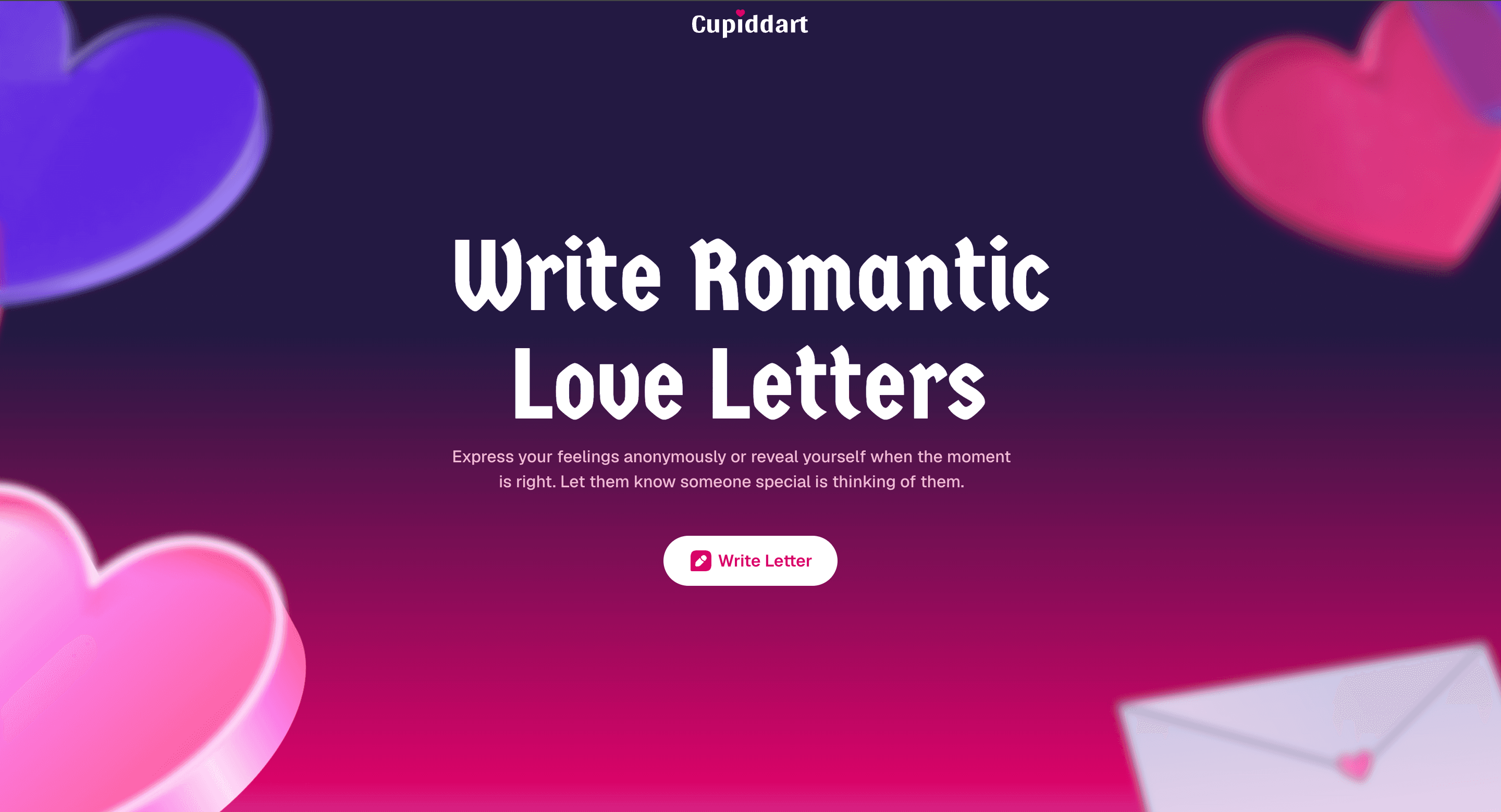
Overview
01 / Context & motivation
Make a digital note feel deliberately made.
Cuppidart began as an exploration of a simple question: what would make a digital love letter feel considered rather than disposable? The current product is an early MVP focused on the smallest complete journey—from an empty canvas to a personalised letter and a clear sending moment.
02 / The real problem
Expression gets lost in the speed of chat.
Digital messages are easy to send, but they often flatten the personality, pacing, and keepsake quality of a handwritten letter. The MVP explores how a lightweight browser-based tool can make a personal note feel deliberately composed without turning expression into a complex design task.
How might we make a digital love letter feel personal and expressive while keeping the act of writing simple?
- Keep writing at the centre of the experience
- Offer meaningful personalisation without a complex design tool
- Separate composing from the final sending decision
- Use the MVP to learn before expanding the product
03 / Design thinking & exploration
Write first, then shape the mood.
The sequence was intentionally kept familiar. A person writes the title and message before styling the words or decorating the page. Personalisation then builds in layers—text treatment, canvas, theme, and stickers—so each decision changes the feeling of the same letter without interrupting the act of writing.
An evolving creative-writing MVP
04 / Key product decisions
One canvas, several layers of expression.
A single guided canvas that moves from writing to personalisation and sending. People compose the letter first, then shape its mood through text styles, canvases, themes, and stickers before entering a separate send flow.
Keep composition at the centre
The title and body remain the primary objects on the canvas. Editing starts with the words, while visual controls stay secondary so the product feels like a letter-writing experience rather than a blank design tool.
Layer personality without leaving the canvas
Text styles, canvas formats, themes, and stickers all update the same composition. The immediate feedback helps people build a mood progressively while preserving their place in the story.
Make sending a deliberate final moment
The send flow is separated from creation so people can review the letter before committing. This gives the emotional action of sending its own clear confirmation point.
05 / Outcome & reflection
An MVP designed to keep evolving.
Cuppidart is an evolving MVP, not a finished product. The current release establishes the core creation flow and is helping reveal where the editor, sending experience, responsiveness, accessibility, and content safeguards need more iteration. I’ll continue updating this case study as the product develops.
Explore more projects
 01
01Let’s Go Drive — Designing a Clearer Car-Rental Journey
 02
02Building the Lipaworld Mobile App: Marketplace × Wallet Integration
 03
03